Concrete & Driveways
Professional Concrete Sealing in the Finger Lakes & Upstate New York
Concrete looks solid, but it is a porous material. Its surface is full of capillaries that pull in water, and with water comes everything dissolved in it: deicing salt, oil, fertilizer, tannins from leaves and general road grime.
In Upstate New York that porosity matters more than almost anywhere else. Water that soaks into concrete in November freezes in December, expands, and pushes outward from inside the slab. Repeated over a winter, that freeze/thaw pressure contributes to surface scaling, pitting and spalling — the flaky, crumbling top layer you see on driveways a few winters after they were poured.
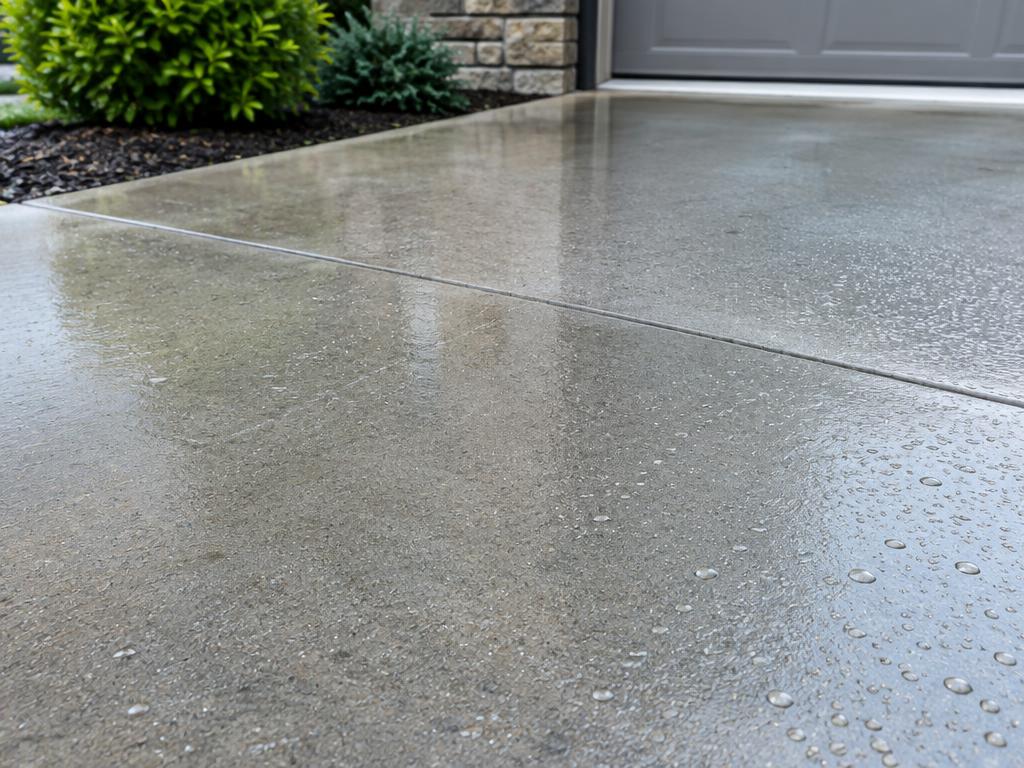
Sealing does not make concrete indestructible and it will not stop all cracking or all freeze/thaw damage. What an appropriate sealer is designed to do is reduce how much water and contamination gets into the surface in the first place, and make what does land on top easier to clean off.
Residential & Commercial
Professional Surface Protection
Suitable Surfaces
- Concrete driveways
- Patios and porches
- Walkways and steps
- Pool surrounds where appropriate
- Garage and exterior slabs where appropriate
- Selected commercial concrete and entrances
What Protection Can Do
Reduced water absorption
A penetrating sealer is designed to line the pores of the slab so less water is drawn in during wet and freezing weather.
Better resistance to salt exposure
Deicing salt is one of the harshest things a Northeast driveway faces. Reduced absorption means less salt-laden water carried into the concrete.
Easier cleaning
Oil drips, leaf stains and general dirt tend to sit closer to the surface on a sealed slab, which usually makes routine cleaning less work.
Appearance options
Depending on the product selected, concrete can keep a natural matte look or be given a subtle appearance-enhancing finish.
Our Process
How the Work Is Done
- 1
Assessment
We check age, finish, porosity, existing coatings, moisture and how the surface is used.
- 2
Preparation
Cleaning and, where needed, stain treatment and profile work — preparation is the single biggest factor in how a sealer performs.
- 3
Application
The selected system is applied at the correct coverage rate in suitable temperature and moisture conditions.
- 4
Cure & guidance
We confirm cure requirements and give you maintenance guidance for the specific product used.
Important Considerations
What a protection system realistically does — and what it does not.
- New concrete generally needs to cure before it can be sealed; timing depends on the mix and the conditions.
- Existing coatings, curing compounds or previous sealers may need to be identified or removed before a new system is applied.
- Sealing does not repair existing cracks, spalling or structural issues, and it does not prevent all future cracking.
- Some sealers change the sheen or darken the surface. We will tell you what to expect before anything is applied.
- We do not make slip-resistance or anti-slip performance claims. If a surface needs a tested traction rating, that has to come from a documented product specification.
In This Region
We work on concrete across Canandaigua, Victor, Farmington, Geneva, the wider Finger Lakes and the Rochester area, where road salt and freeze/thaw are the dominant exposure.
Residential
Homes, driveways, patios, decks and interior surfaces.
Commercial
Selected commercial surfaces and entrances where suitable.